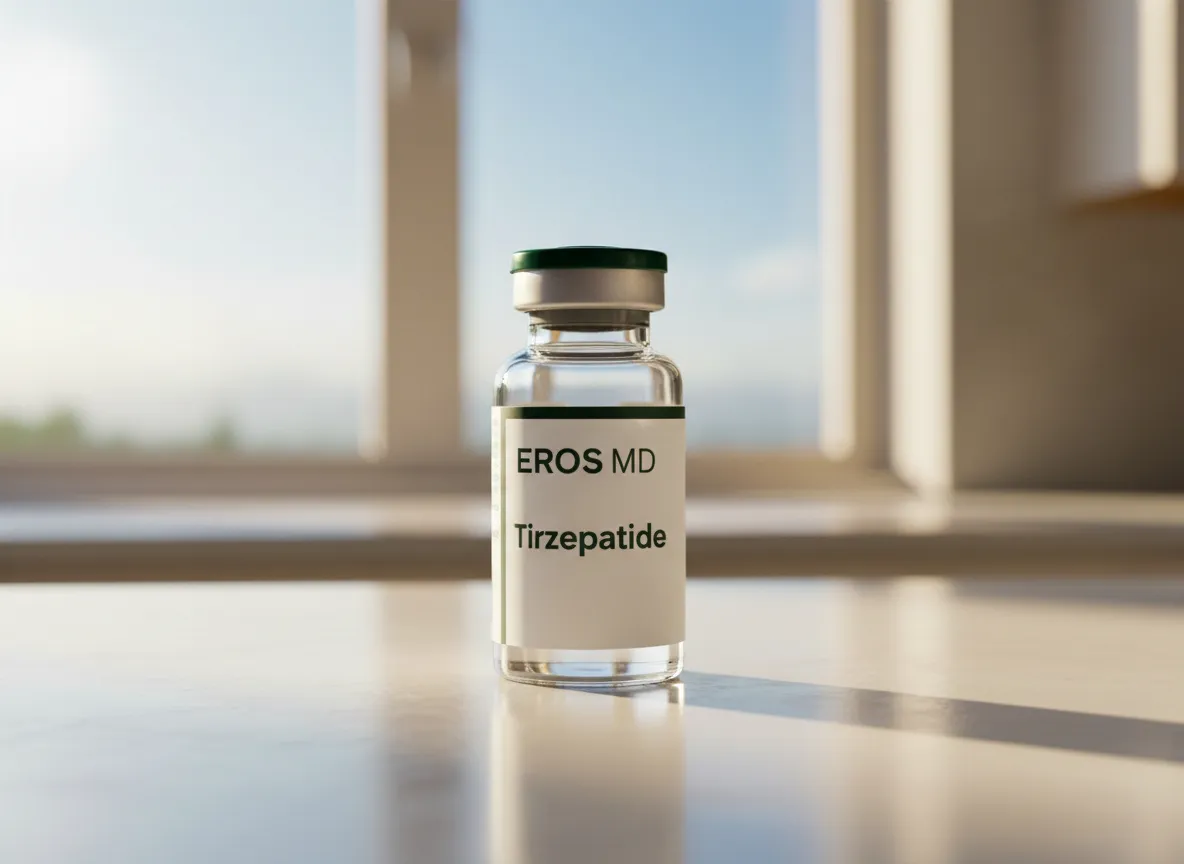
Tirzepatide is the active ingredient in Mounjaro and Zepbound and is the most effective pharmaceutical weight loss medication currently available, based on clinical trial averages. It belongs to the dual GLP-1 / GIP receptor agonist class — the newest generation of weight loss medication. This article explains what tirzepatide is, how it differs from GLP-1-only medications, what the SURMOUNT trial program shows, and what to discuss with a physician before considering it.
What tirzepatide is
Tirzepatide is a dual receptor agonist that activates both the GLP-1 (glucagon-like peptide-1) and GIP (glucose-dependent insulinotropic polypeptide) receptors. Both are naturally occurring incretin hormones involved in appetite regulation, satiety, and metabolism. By activating both receptors simultaneously, tirzepatide produces a broader metabolic effect than GLP-1-only medications. It was first approved as Mounjaro for Type 2 diabetes in 2022 and as Zepbound for chronic weight management in 2023.
How tirzepatide works for weight loss
Tirzepatide reduces hunger, slows gastric emptying, and improves insulin secretion in a glucose-dependent way. The dual activation of GLP-1 and GIP appears to produce a synergistic effect on appetite, satiety, insulin sensitivity, and fat cell metabolism. The clinical result is a meaningful, sustained reduction in caloric intake without willpower-based restriction — the same fundamental mechanism as GLP-1-only medications, but with somewhat greater efficacy on average.
What the SURMOUNT trials show
The SURMOUNT clinical trial program produced some of the most significant weight loss data ever recorded for a pharmaceutical medication. SURMOUNT-1 showed adults with obesity treated with tirzepatide 15mg weekly lost an average of 22.5 percent of body weight over 72 weeks, compared with 2.5 percent on placebo. SURMOUNT-2 found adults with Type 2 diabetes lost an average of 15.7 percent of body weight, comparable to GLP-1-only results in non-diabetic populations. At maximum dose, approximately 50 percent of participants lost 20 percent or more of their body weight — results previously seen only with bariatric surgery. Significant cardiometabolic improvements were also observed, including reductions in blood pressure, triglycerides, HbA1c, and waist circumference. Individual results vary.
Dosing and titration
Tirzepatide is administered as a weekly subcutaneous injection in the abdomen, thigh, or upper arm, with rotation between sites. It follows a gradual titration schedule to improve tolerability: 2.5mg weekly for weeks 1 to 4, 5mg for weeks 5 to 8, 7.5mg for weeks 9 to 12, 10mg for weeks 13 to 16, 12.5mg for weeks 17 to 20, and 15mg weekly at maintenance. Not all patients need to reach 15mg. The right maintenance dose is the one that produces meaningful weight loss with acceptable side effects, and a good physician adjusts based on individual response.
Common side effects and safety considerations
The most common side effects are gastrointestinal: nausea, diarrhea, vomiting, constipation, and injection-site reactions. As with GLP-1-only medications, GI side effects are typically most pronounced during dose titration and improve over time. Slower titration, smaller meals, and adequate hydration meaningfully reduce the burden for most patients.
Less common but serious considerations include pancreatitis (rare, presenting as severe persistent abdominal pain) and gallbladder disease, which is more common during rapid weight loss. Tirzepatide carries a black box warning for thyroid C-cell tumors based on rodent studies and is contraindicated in patients with a personal or family history of medullary thyroid carcinoma or MEN 2 syndrome. Hypoglycemia is primarily a concern when tirzepatide is combined with insulin or sulfonylureas. It is not appropriate during pregnancy. A qualified physician screens for these contraindications before prescribing.
What patients typically experience over time
Reduced appetite is often noticeable within the first few weeks. Meaningful weight loss typically becomes apparent at 8 to 12 weeks. Maximum results generally appear at 12 to 18 months of consistent treatment at maintenance dose. SURMOUNT-4 data shows substantial weight regain after discontinuation, reflecting that tirzepatide is managing a chronic physiological condition rather than curing it. Long-term planning — whether to continue, taper, or transition — is part of responsible care.
Share
About the author
Dr. Dawnmarie Riley, DO
Women's Health Lead · DO
Board-certified OB/GYN and Women's Health Lead at Eros MD. Specializes in hormonal health, perimenopause, menopause, and integrative aesthetics.