Appetite Reduction
GLP-1 receptors in the hypothalamus signal reduced hunger and increased satiety, making it physiologically easier to eat less without fighting cravings.
GLP-1 and GIP receptor agonists are the most clinically effective weight loss medications ever developed. Here is what you need to understand before starting a physician-supervised program.
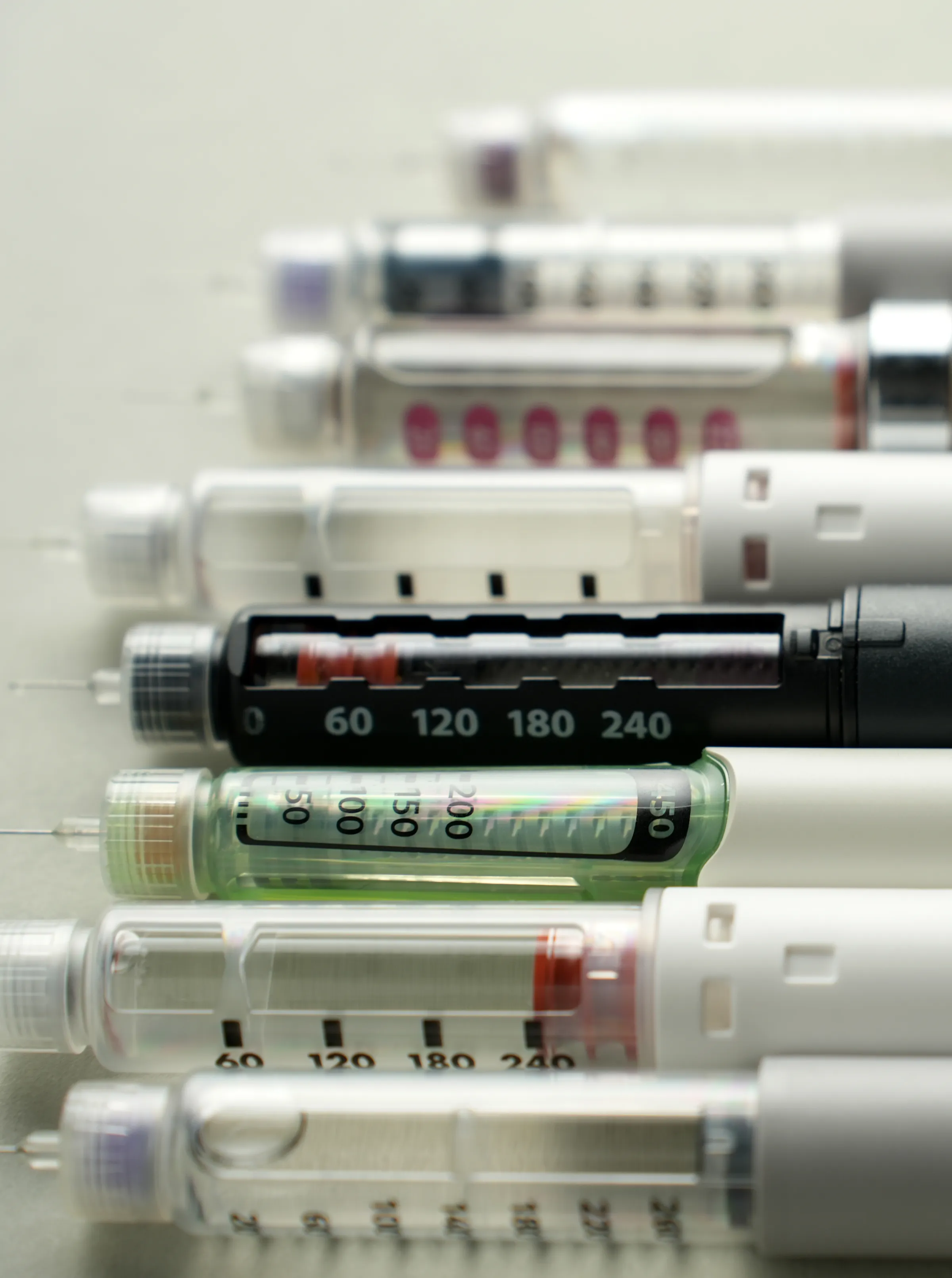
what is GLP-1

GLP-1 (glucagon-like peptide-1) is a hormone produced naturally in the gut after eating. It signals the brain to reduce hunger, stimulates insulin secretion, slows gastric emptying, and promotes satiety. GLP-1 receptor agonist medications mimic this hormone's effects, producing sustained appetite reduction and significant weight loss.
Your body naturally produces GLP-1 after eating. It is part of the hormonal system that tells your brain you are full and your pancreas to release insulin. In people with obesity, this signaling can be dysregulated. GLP-1 response is insufficient, hunger signals are amplified, and normal satiety does not fire strongly enough.
GLP-1 receptor agonist medications mimic this hormone at much higher levels than the body produces naturally, effectively recalibrating the appetite regulation system. The result is a genuine, physiological reduction in hunger that does not depend on willpower or restriction.
four mechanisms
GLP-1 medications work through four physiological mechanisms, all rooted in natural hormone signaling. The combined effect is sustained appetite reduction without the willpower battles of older approaches.
GLP-1 receptors in the hypothalamus signal reduced hunger and increased satiety, making it physiologically easier to eat less without fighting cravings.
GLP-1 slows the rate food leaves the stomach, extending the feeling of fullness after meals.
GLP-1 stimulates insulin secretion in a glucose-dependent manner, improving blood sugar control without causing hypoglycemia on its own.
Emerging research suggests GLP-1 may affect the brain's reward response to food, reducing the psychological drive to eat beyond satiety.
generation comparison
GLP-1 Receptor Agonist
Dual GLP-1 / GIP Agonist
Feature
Receptors
Avg Weight Loss
Examples
Clinical Depth
GLP-1 Receptor Agonist
GLP-1 only
~15 percent
Weekly subcutaneous injection
More extensive, longer track record
Dual GLP-1 / GIP Agonist
GLP-1 and GIP
Up to ~22 percent
Weekly subcutaneous injection
Newer generation, growing data
how to choose
The right medication is determined by your physician based on health history, goals, contraindications, and clinical suitability, not just trial averages. Your Eros MD provider reviews your full metabolic profile and recommends the most appropriate option.
Dual GLP-1 / GIP agonists produce greater average weight loss in trials than GLP-1-only agonists. Average is not a prescription. Individual response varies, tolerability differs, cost considerations matter, and patient preferences count. The right medication for you is a clinical decision, not a ranking.
Often the first-line option. The longest track record and the most extensive clinical evidence base. Average weight loss approximately 15 percent.
Patients seeking maximum efficacy or who have plateaued on a GLP-1-only medication often move to the dual-agonist class. Up to 22 percent average weight loss in trials.
Both classes are chronic-use medications. Long-term monitoring matters. Eros MD includes structured check-ins as standard, not as an add-on.
Questions worth asking
GLP-1 stands for glucagon-like peptide-1, a hormone naturally produced in the intestine after eating. GLP-1 receptor agonists are medications that mimic this hormone to reduce appetite, improve satiety, and promote weight loss.
GLP-1 medications have a well-established safety profile from extensive clinical trials. The most common side effects are gastrointestinal. Important contraindications include a history of medullary thyroid cancer or MEN2 syndrome. Physician oversight and proper screening are essential.
Yes. All GLP-1 weight loss medications are prescription-only. Eros MD provides online physician evaluation and, if appropriate, prescribes them through licensed pharmacies.
GLP-1 medications are typically long-term treatment, not a short course. Clinical evidence shows weight regain when stopped. Long-term management strategy should be planned with your physician.
Dual GLP-1 / GIP agonists produce greater average weight loss (~22 percent) than GLP-1-only agonists (~15 percent) in clinical trials. Individual response varies. Many patients achieve excellent results on a GLP-1-only medication. Your provider will help decide based on your specific profile.
Older weight loss medications were typically stimulant-based or worked through limited mechanisms, producing modest and often temporary results. GLP-1 agonists work through the body's natural appetite regulation and metabolic signaling, a fundamentally different mechanism with fundamentally better results.